

As autonomous AI agents proliferate across decentralized applications, the need for frictionless micropayments becomes paramount. x402 Payment Intents on the Base chain addresses this by enabling AI agents to execute pay-per-use transactions with USDC in seconds, all over standard HTTP. This Coinbase x402 integration eliminates accounts, keys, or OAuth, positioning it as the ideal solution for AI agent micropayments on Base.

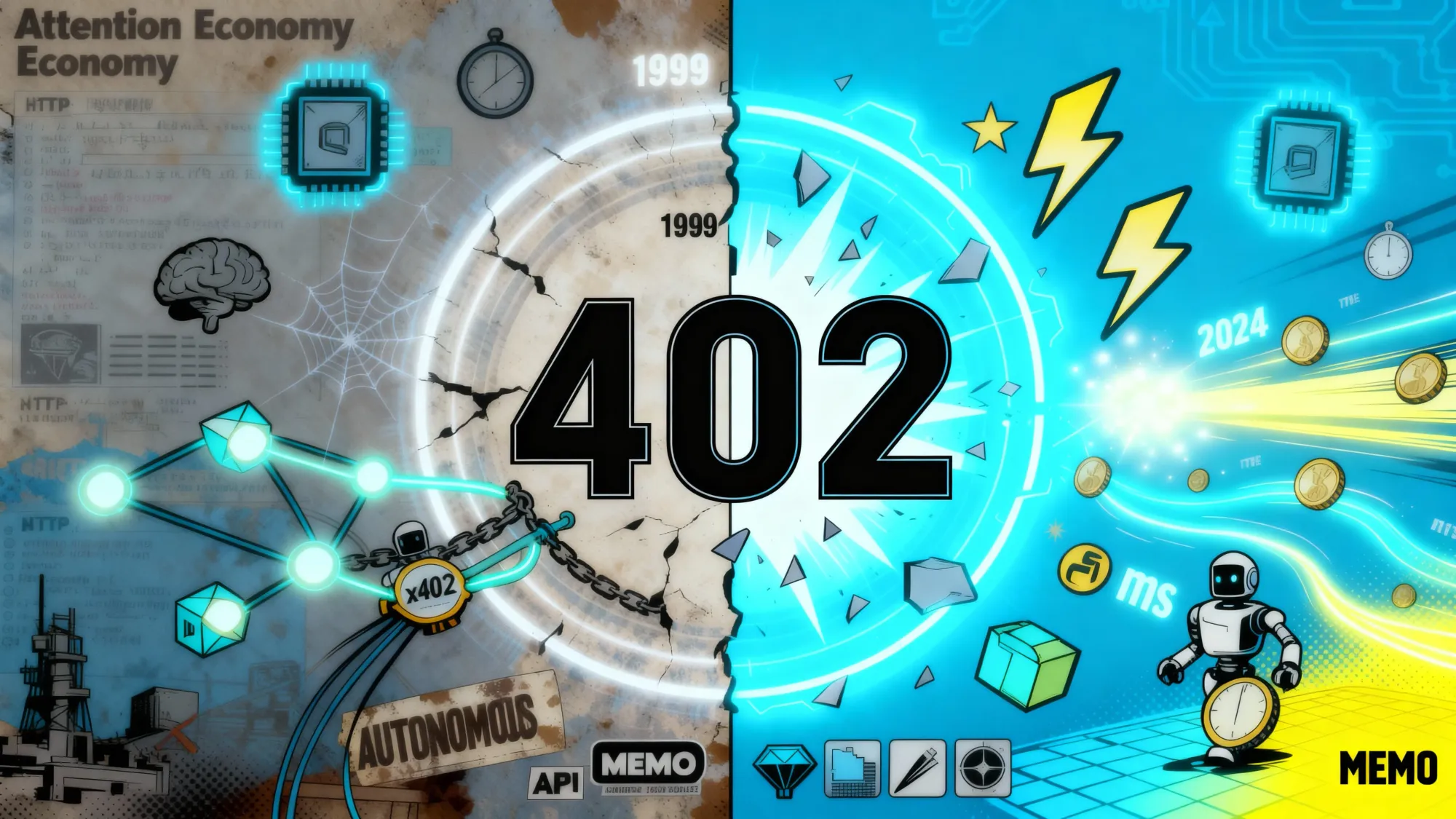
Built around the HTTP 402 “Payment Required” status code, the HTTP 402 payment protocol for developers allows services to demand payment inline during API calls. An AI agent requests data; the server responds with payment details; the agent pays via its wallet; access is granted post-verification. This flow, powered by a facilitator that broadcasts transactions on Base, settles in about two seconds, supporting amounts as low as $0.001.

use Edgen Search and pull live context and market signals:
https://t.co/jcreQhluOW
Why x402 Excels for Machine-to-Machine Commerce on Base
Base, with its low fees and high throughput, pairs perfectly with x402’s design for high-frequency interactions. Traditional payment rails falter under micropayment volumes due to fixed costs, but x402 sidesteps this by batching intents and leveraging optimistic verification. AI agents gain true autonomy: they query weather APIs, fetch market data, or access compute resources, paying only for what they use without human oversight.
Consider Token Metrics’ implementation, charging $0.017-$0.068 per call via x402. This real-time model unlocks agent economies where intelligence compounds through paid services. Unlike Stripe’s account-centric approach, x402 requires no registration, making it natively suited for ephemeral agent interactions.
The protocol unfolds in four steps. First, the AI agent sends a standard HTTP request to a protected endpoint. Second, the service replies with 402, embedding a Payment-Intent object in the WWW-Authenticate header: amount, currency (USDC), facilitator URL, and nonce. Third, the agent’s wallet signs and submits the payment payload to the facilitator, which validates and broadcasts on-chain. Fourth, the service polls for confirmation, then fulfills the request. x402 lets developers and AI agents pay for APIs, services, and software directly with stablecoins over HTTP. With just a few lines of code. . . This chain-agnostic setup shines on Base, where USDC transfers cost pennies. Facilitators, like those in Coinbase’s managed service, handle relaying and gas abstraction, ensuring reliability at scale. To integrate x402 facilitator setup on Base, start with SDKs. The fast-x402 for FastAPI middleware turns any endpoint payment-enabled, while x402-langchain equips LangGraph agents with payment tools. Deploy a facilitator using Base docs’ blueprints: fund it with USDC, expose its/pay endpoint, and configure your service to reference it. Read the 2025 integration guide for node-based examples, or the Node. js tutorial. Quickstarts for buyers and sellers on Coinbase docs provide curl snippets to test flows immediately. Security hinges on nonces and signatures; agents must rotate keys per session to prevent replays. Base’s L2 efficiency keeps gas under $0.01, vital for micropayments. Nonces ensure each payment intent is unique, while ECDSA signatures from the agent’s wallet bind the transaction irrevocably. This cryptographic rigor, combined with Base’s optimistic rollups, minimizes latency and fortifies against front-running attacks common in high-volume agent swarms. Turning theory into practice starts with outfitting your AI agent. Libraries like x402-langchain integrate seamlessly into LangGraph workflows, adding a pay tool that handles 402 challenges autonomously. Imagine an agent scraping real-time sentiment data: it hits a paywalled API, receives the intent, executes via its Base wallet, and proceeds, all in under five seconds. Once the facilitator hums on Base, funded with USDC and exposing its/pay endpoint, test with curl as per Coinbase quickstarts. Sellers configure middleware to inject 402s; buyers parse WWW-Authenticate headers. This symmetry empowers peer-to-peer agent markets, where one agent’s output funds another’s input. To create a seller endpoint that requires USDC micropayments on the Base chain, we’ll use FastAPI integrated with the fast-x402 middleware. This middleware intercepts requests, enforces payment via X402 HTTP Payment headers, and verifies intents on-chain before granting access. Thoughtfully configure it for Base (chain ID 8453) and USDC, ensuring secure, autonomous transactions for AI agents. Deploy this FastAPI app using `uvicorn main:app –host 0.0.0.0 –port 8000 –reload`. AI agent clients must include valid X402 Payment-Agent and Payment-Intent headers with a signed USDC transfer to your wallet. Monitor payments via Base explorer for methodical verification and scaling micropayment flows. Delve deeper into the seller flow. A FastAPI route decorated with x402 middleware responds to unpaid requests with precise payment details: Token Metrics exemplifies success, pricing calls at $0.017-$0.068 through x402. Their agents query crypto APIs, paying per insight to refine portfolios without subscriptions. On Base, this scales to thousands of transactions per minute, fees dwarfed by value delivered. Fintech observers dub it “Stripe for AI agents, ” but x402’s HTTP nativity eclipses account models, fostering ephemeral, trust-minimized commerce. Challenges persist: wallet management demands robust key rotation, and oracle dependencies for off-chain verification add vectors. Yet Base’s ecosystem, vitalik-optimized for cheap L2, mitigates these. Pair x402 with account abstraction via ERC-4337, and agents gain session keys for batched payments, slashing overhead further. Security audits underscore nonces’ role; without them, replay attacks drain wallets. Facilitators must validate chain ID (Base mainnet: 8453) to thwart cross-chain exploits. For production, Coinbase’s managed facilitator abstracts this, but self-hosting via GitHub blueprints grants sovereignty. Envision agent swarms optimizing supply chains: one forecasts demand via paid APIs, another executes trades on DEXes, settling micropayments in loops. This machine economy, lubricated by x402 payment intents, hinges on Base’s throughput. Developers integrating Coinbase x402 integration today position for tomorrow’s autonomous web. Resources abound: GitBook quickstarts for sellers detail endpoint hardening; Base docs outline agent blueprints. The x402 whitepaper elucidates protocol nuances, from payload schemas to error codes. With SDKs handling boilerplate, focus shifts to agent logic, querying, paying, iterating. Frictionless AI agent micropayments on Base via the HTTP 402 payment protocol for developers isn’t hype; it’s operational. Deploy a testnet facilitator, spin up a LangChain agent, and witness autonomy unfold. In a world of proliferating intelligence, x402 equips agents to thrive independently, transaction by transaction. Core Mechanics of x402 Payment Flows
Preparing for x402 Facilitator Setup on Base
Hands-On: Equipping AI Agents with x402 Payment Tools
FastAPI Seller Endpoint with fast-x402 Middleware for USDC on Base
from fastapi import FastAPI, Depends
from fast_x402 import X402Middleware, verify_payment

app = FastAPI(title="X402 Payment Seller on Base")

# Add X402 middleware configured for USDC micropayments on Base chain
app.add_middleware(
    X402Middleware,
    currency="USDC",
    chain_id=8453,  # Base mainnet chain ID
    min_amount=0.01,  # Minimum USDC payment required
    wallet_address="0xYourSellerWalletAddressHere"  # Replace with your Base wallet
)

@app.get("/seller-resource", dependencies=[Depends(verify_payment)])
async def seller_resource():
    """
    Paywalled endpoint requiring USDC micropayment via X402.
    Autonomous AI agents can pay and access this resource.
    """
    return {
        "status": "payment verified",
        "data": "Exclusive micropaid content for AI agents on Base",
        "message": "Transaction successful - resource unlocked."
    }

if __name__ == "__main__":
    import uvicorn
uvicorn.run(app, host="0.0.0.0", port=8000)WWW-Authenticate: x402 amount="0.001", currency="USDC", facilitator="https://your-facilitator.base/pay". The agent’s SDK unpacks this, crafts the payload, intent ID, signature, calldata, and posts to the facilitator. Verification triggers fulfillment, often via WebSockets for sub-second polling. Real-World Deployments and Scaling Insights
About the Author