

In the fast-paced world of blockchain development, few innovations match the elegance of x402 payment intents on Solana. As of February 13,2026, with Binance-Peg SOL trading at $79.87 after a slight 1.60% dip over the past 24 hours, developers are flocking to this protocol for its promise of instant, HTTP-native micropayments. Coinbase’s x402 leverages the long-dormant HTTP 402 ‘Payment Required’ status code to turn any API or endpoint into a pay-per-use service, settling in USDC on Solana’s lightning-fast network. Forget clunky subscriptions or key management; x402 enables automatic x402 payment handlers that verify and settle transactions in milliseconds.
This surge isn’t hype. The protocol boasts a 750% growth rate, 285 SDK downloads in one week, and endorsements from Binance’s CZ pushing for BSC integration. For devs building dApps, AI agents, or content paywalls, Coinbase x402 Solana integration means scalable Solana USDC micropayments without the gas wars of Ethereum. Solana’s throughput handles thousands of TPS at pennies per tx, perfect for high-volume scenarios like agentic payments or per-request API access.
Unlocking HTTP 402 Solana Developers Need in 2026
x402 reimagines web monetization by embedding payments directly into HTTP flows. When a client hits your server, it responds with 402 if payment is due, including a Payment-Request header with token details, amount, and settlement instructions. Clients using x402 SDKs, like Node. js helpers from Coinbase, automatically detect this, prompt wallet approval, and retry the request post-settlement. On Solana, this uses compressed transactions and priority fees for sub-second confirmations.
Consider a real-world setup: you’re exposing premium data feeds. Without x402, you’d wrangle Stripe webhooks or manual invoicing. With it, every GET/premium-data?query=xyz triggers an atomic USDC transfer. Sol402. app takes this further, letting you wrap any URL in a paywall with zero backend code. Developers report 10x faster implementation times, and with SOL at $79.87 holding steady above its 24h low of $76.64, the ecosystem’s stability bolsters confidence.
Solana’s low fees make x402 viable for true micropayments, down to fractions of a cent per request.
This shines for HTTP 402 Solana developers 2026 targeting AI-native apps. Agents can now pay each other autonomously, think an analysis bot charging for insights or a trading signal service billing per alert. Coinbase docs highlight quickstarts for buyers and sellers, while Solana’s guide walks through a minimal verifier server.
Streamlining Coinbase x402 Solana Integration for Automatic Handlers
Getting started demands a pragmatic approach. First, install the x402 SDK via npm: it’s battle-tested for Node. js and plays nice with Express or Fastify. Configure your server to inspect incoming requests against a recipient wallet on Solana mainnet. If unauthorized, fire back a 402 with headers like:
Pro tip: leverage Sol402 for no-code prototypes. Paste your endpoint, set USDC amount (say, $0.01 per call), and deploy. It auto-generates the verifier, integrating seamlessly with Coinbase wallets. This bypasses custom smart contracts, ideal for MVPs. As adoption grows, fueled by integrations like XMTP chat agents or Telegram bots, your automatic x402 payment handler becomes a revenue engine.
Solana (SOL) Price Prediction 2027-2032
Forecasts amid x402 Payment Protocol Adoption and Micropayments Boom on Solana
| Year | Minimum Price (Bearish) | Average Price (Base) | Maximum Price (Bullish) | Est. YoY Growth (Avg from Prev) |
|---|---|---|---|---|
| 2027 | $85 | $140 | $280 | +40% |
| 2028 | $110 | $220 | $450 | +57% |
| 2029 | $160 | $350 | $700 | +59% |
| 2030 | $220 | $500 | $950 | +43% |
| 2031 | $280 | $650 | $1,300 | +30% |
| 2032 | $350 | $850 | $1,700 | +31% |
Price Prediction Summary
Solana (SOL) is projected to experience robust growth from 2027 to 2032, driven by x402’s explosive adoption for HTTP-native micropayments. Starting from a 2026 base of ~$100, average prices could reach $850 by 2032 in the base case, with bullish scenarios exceeding $1,700 amid AI agent integrations and developer SDK surges. Bearish cases account for market cycles and competition, holding above $350.
Key Factors Affecting Solana Price
- x402 protocol’s 750% growth and 285+ SDK downloads signaling developer momentum
- Solana’s superior throughput/low fees ideal for micropayments and AI agents
- Support from Binance (CZ advocacy) and integrations with Base/XMTP
- Potential regulatory tailwinds for stablecoin payments (USDC settlements)
- Market cycles, competition from Ethereum L2s/Base, and macro risks influencing min/max ranges
- Sol402 platform enabling easy paywalls, boosting real-world use cases
Disclaimer: Cryptocurrency price predictions are speculative and based on current market analysis.
Actual prices may vary significantly due to market volatility, regulatory changes, and other factors.
Always do your own research before making investment decisions.
Why Solana USDC Micropayments Devs Can’t Ignore x402
Solana’s edge lies in economics. At $79.87, SOL underpins a network where tx fees average $0.00025, orders below competitors. Pair this with USDC’s stability, and x402 unlocks granular pricing: charge $0.001 for lightweight queries, $0.10 for deep computations. No more bundling into subscriptions that scare off users.
For devs, the real win is composability. Build handlers that chain payments: an AI agent pays your API, which pays a data oracle, all settled on Solana. QuickNode guides demonstrate this on testnets, but mainnet shines with real volume. Growth metrics scream opportunity: 750% YoY, CZ’s nod signaling cross-chain momentum.
Imagine deploying a trading signal bot that charges per prediction, verified instantly on Solana. With SOL at $79.87, network costs stay negligible, letting you pocket nearly 100% of each Solana USDC micropayments. This isn’t theoretical; Sol402. app users are already live-minting revenue from APIs others give away free.
Hands-On: Crafting Automatic x402 Payment Handlers
Time to build. Developers love x402 for its minimal footprint. Start with a Node. js server using Express. On request, parse headers for prior payments via Solana RPC. No payment? Respond 402 with precise details: amount in USDC, recipient pubkey, and idempotency nonce. Clients equipped with Coinbase’s buyer SDK auto-handle the rest, signing via Phantom or Coinbase Wallet.
Build a Simple x402 HTTP 402 Server on Solana
“`bash
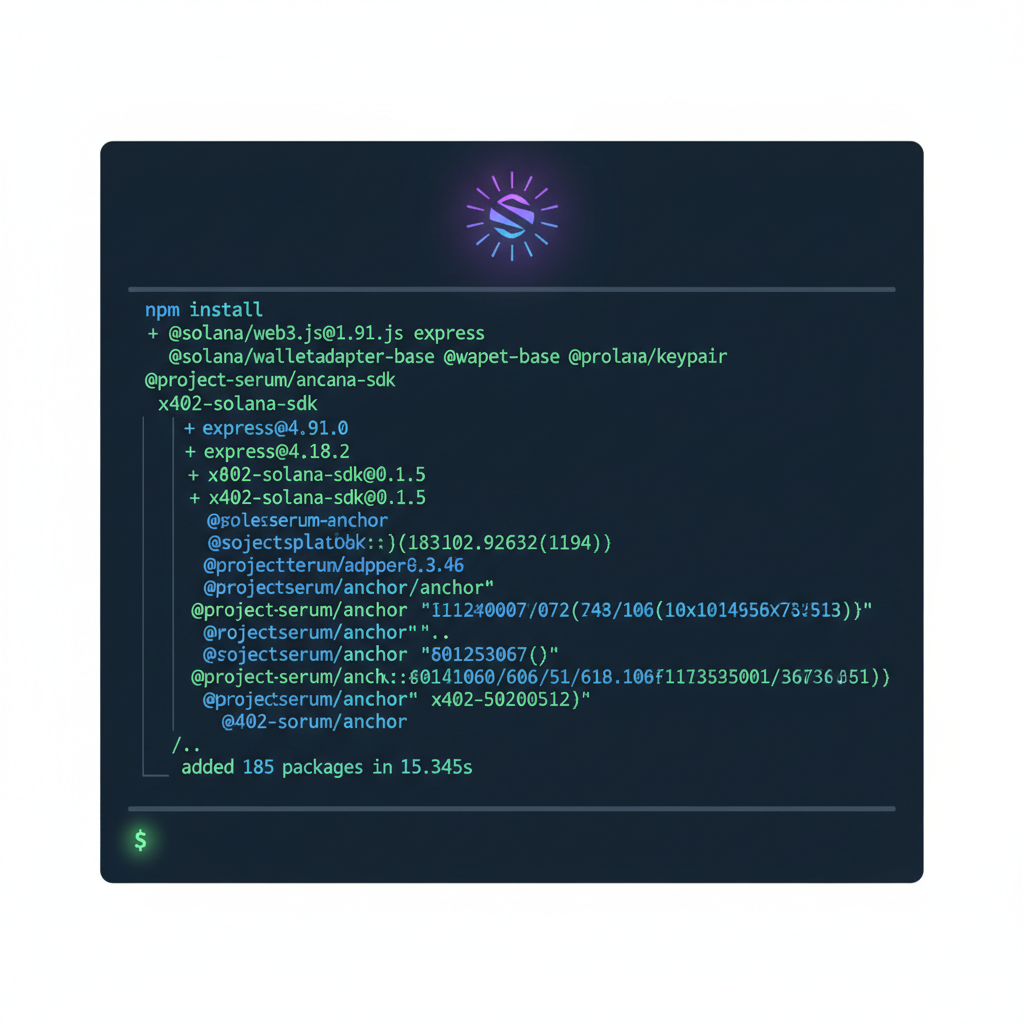
npm init -y
npm install @coinbase/x402-solana express @solana/web3.js
“`
This sets up the core dependencies for handling x402 payments on Solana.
“`javascript
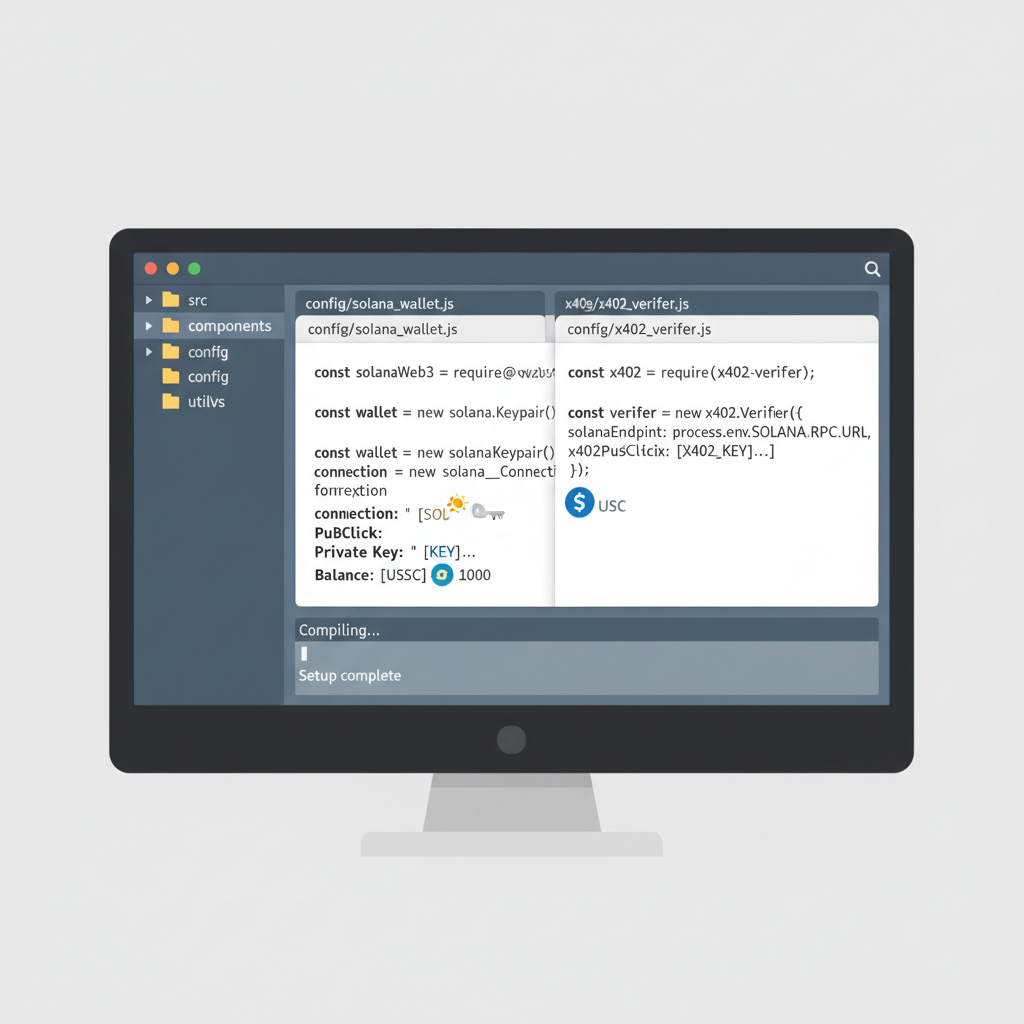
const { Keypair } = require(‘@solana/web3.js’);
const { X402Verifier } = require(‘@coinbase/x402-solana’);
const wallet = Keypair.generate(); // Use your existing keypair
const verifier = new X402Verifier(wallet.publicKey.toString(), ‘USDC’);
“`
Replace with your actual wallet details for payment verification.
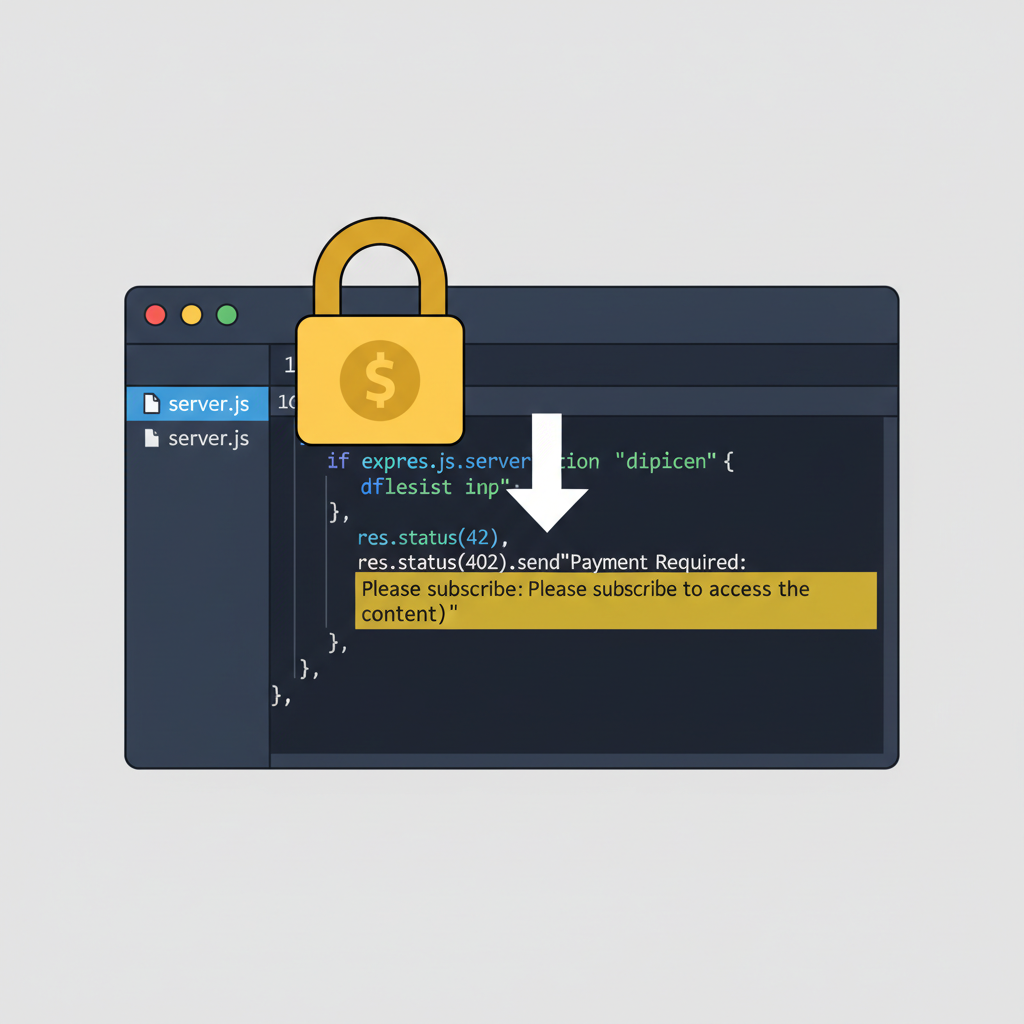
“`javascript
const express = require(‘express’);
const app = express();
app.use(‘/protected’, verifier.middleware());
app.get(‘/protected/content’, (req, res) => {
res.status(402).json({ message: ‘Payment Required’, invoice: verifier.createInvoice(0.01) });
});
app.listen(3000);
“`
This intercepts requests and demands payment.
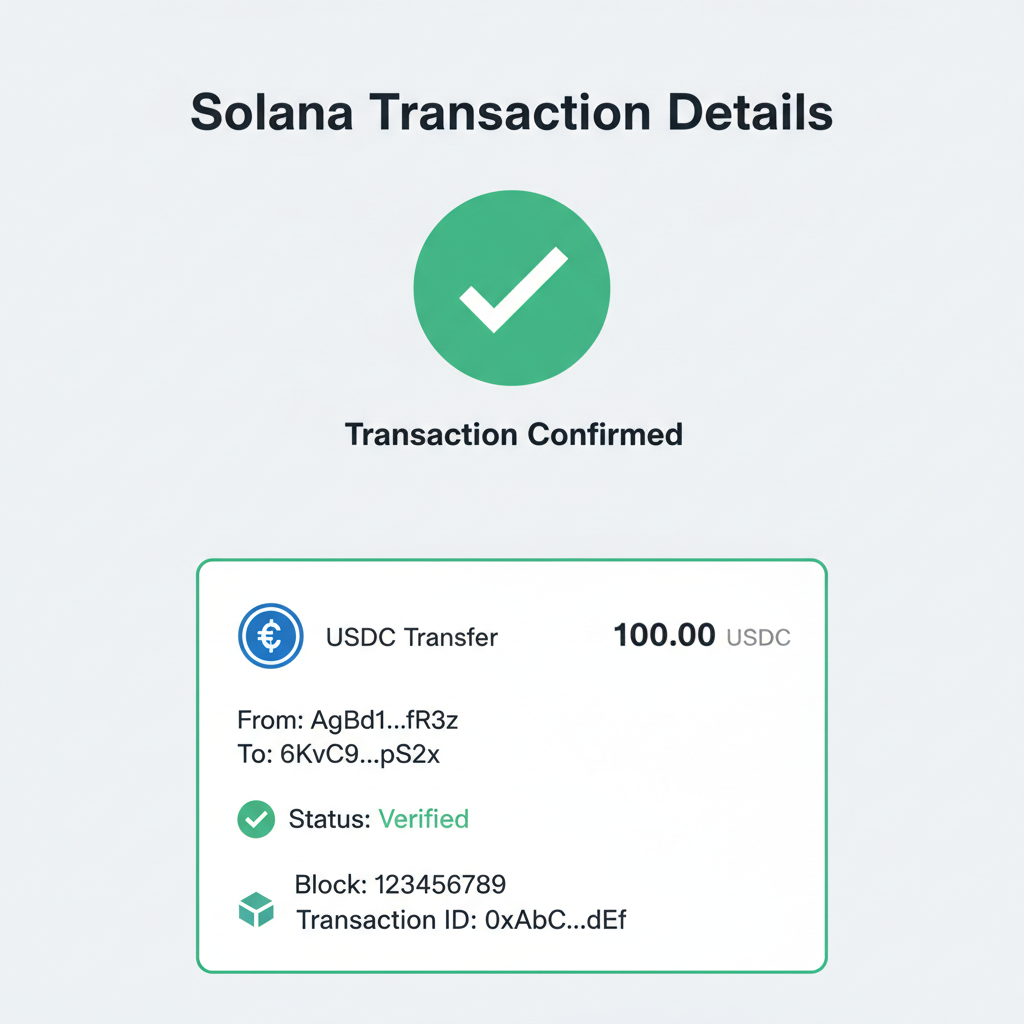
“`javascript
verifier.on(‘payment’, async (txSignature) => {
const isValid = await verifier.verifyTx(txSignature);
if (isValid) {
console.log(‘Payment verified on Solana!’);
}
});
“`
Leverage Solana’s low fees for efficient micropayments. Current Binance-Peg SOL price: $79.87.
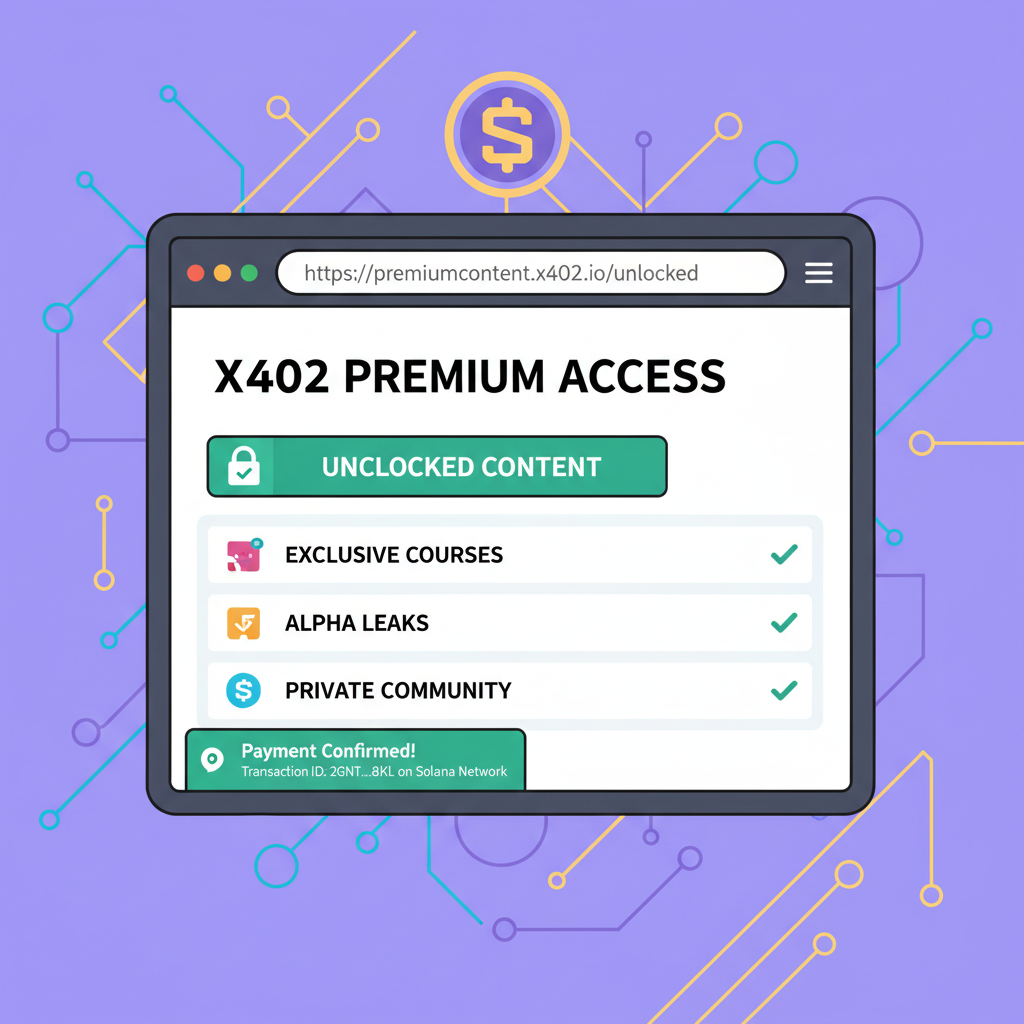
“`javascript
app.get(‘/protected/content’, verifier.protect(async (req, res) => {
res.json({ content: ‘Premium API data unlocked!’ });
}));
“`
Test your server at http://localhost:3000/protected/content. Payments settle instantly on Solana.
Once live, scale it. Anchor your verifier as a program for custom logic, like tiered pricing based on request complexity. For AI devs, integrate with LangChain agents: embed x402 calls in toolkits, enabling self-funding bots. Base docs show XMTP pairings for chat-to-pay flows, where users tip mid-convo. Telegram bots from Medium tutorials monetize premium replies, all settled sub-second on Solana.
Edge cases? Replay protection via nonces, rate-limiting via on-chain credits. Solana’s state compression keeps verifier costs under $0.001 per check. Test on devnet first: Coinbase quickstarts provide faucets and mock wallets. QuickNode’s Base Sepolia guide ports easily to Solana, swapping chains in one config line.
Full Node.js Example: X402 Buyer Handler Retrying After Solana USDC Payment
Implement a robust X402 buyer handler in Node.js that automatically handles HTTP 402 Payment Required responses by transferring USDC on Solana and retrying the request. This example includes balance checks, transaction confirmation, and payment proof headers.
const { Connection, PublicKey, Keypair, Transaction } = require('@solana/web3.js');
const {
  TOKEN_PROGRAM_ID,
  getAssociatedTokenAddress,
  getAccount,
  createTransferInstruction
} = require('@solana/spl-token');
const fetch = require('node-fetch');

// Configuration - Replace with your own values
const RPC_ENDPOINT = 'https://api.mainnet-beta.solana.com';
const USDC_MINT = 'EPjFWdd5AufqSSqeM2qN1xzybapC8G4wEGGkZwyTDt1v';
const WALLET_SECRET_KEY = Uint8Array.from([
  // Load your 64-byte wallet secret key securely (e.g., from env or file)
  // Example: 171, 205, ... (do NOT hardcode in production)
]);

const conn = new Connection(RPC_ENDPOINT);
const payer = Keypair.fromSecretKey(WALLET_SECRET_KEY);

const USDC_MINT_PUBKEY = new PublicKey(USDC_MINT);

async function x402BuyerHandler(url, init = {}) {
  let response = await fetch(url, init);

  if (response.status === 402) {
    // Parse X402 payment request from response body
    const paymentRequest = await response.json();
    // Expected format:
    // {
    //   "currency": "USDC",
    //   "amount": "1.00",
    //   "destination": "SellerPublicKeyString",
    //   "network": "solana"
    // }

    const amountLamports = Math.floor(parseFloat(paymentRequest.amount) * 1_000_000); // USDC: 6 decimals
    const destination = new PublicKey(paymentRequest.destination);

    // Get payer's USDC ATA
    const sourceATA = await getAssociatedTokenAddress(USDC_MINT_PUBKEY, payer.publicKey);
    const sourceAccount = await getAccount(conn, sourceATA);
    if (parseInt(sourceAccount.amount) < amountLamports) {
      throw new Error(`Insufficient USDC balance. Need ${amountLamports}, have ${sourceAccount.amount}`);
    }

    // Get destination ATA (assume seller has it; add creation logic if needed)
    const destATA = await getAssociatedTokenAddress(USDC_MINT_PUBKEY, destination);

    // Create transfer instruction
    const transferIx = createTransferInstruction(
      sourceATA,
      destATA,
      payer.publicKey,
      amountLamports,
      [],
      TOKEN_PROGRAM_ID
    );

    const tx = new Transaction().add(transferIx);

    // Send and confirm transaction
    const signature = await conn.sendTransaction(tx, [payer], {
      skipPreflight: false,
      preflightCommitment: 'confirmed'
    });

    await conn.confirmTransaction(signature, 'confirmed');
    console.log(`Payment confirmed: https://solscan.io/tx/${signature}`);

    // Retry original request with payment proof
    const retryInit = {
      ...init,
      headers: {
        ...init.headers,
        'X402-Payment-Signature': signature,
        'X402-Payment-Destination': paymentRequest.destination,
        'X402-Payment-Amount': paymentRequest.amount
      }
    };

    response = await fetch(url, retryInit);
  }

  return response;
}

// Usage
(async () => {
  try {
    const res = await x402BuyerHandler('https://api.example.com/x402-protected-endpoint');
    const data = await res.json();
    console.log('Success:', data);
  } catch (error) {
    console.error('Error:', error);
  }
})();
**Important notes:**
– Install dependencies: `npm install @solana/web3.js @solana/spl-token node-fetch`.
– Securely manage `WALLET_SECRET_KEY` using environment variables or a key vault—never hardcode it.
– Assumes the seller’s USDC ATA exists; extend with ATA creation if necessary (buyer pays rent).
– Add transaction retries, fee estimation, and priority fees for production.
– Customize payment request parsing based on your X402 server implementation.
– Test on devnet first!
Pro developers chain this into pipelines. Your analytics endpoint pays an oracle for fresh SOL price data at $79.87, then bills the end-user double. Atomicity ensures no leaks. With 750% growth, expect SDKs for Rust, Python soon, accelerating Coinbase x402 Solana integration.
x402’s Solana Supremacy for 2026 Devs
Why Solana over Base or BSC? Throughput: 65k TPS theoretical, real-world 4k and. Fees: $0.00025 average, vs Ethereum L2’s $0.01 and. USDC liquidity: $10B and TVL. x402 thrives here, powering agentic economies where bots trade signals, render images, or query LLMs per token. Antier Solutions nails it: enterprise automation via AI payments, no human in loop.
CZ’s BSC push hints multi-chain future, but Solana leads for speed freaks. At $79.87 after dipping to $76.64, SOL’s chart shows support at $75, eyeing $90 resistance. x402 adoption could catalyze the breakout, as payment volume surges TPS.
HTTP 402 wasn’t born yesterday; x402 resurrects it for crypto’s web3 era, Solana edition.
Security first: use HD wallets, session keys for agents. Audit verifiers against reentrancy. Coinbase’s open protocol invites forks, but stick to canon for interoperability. For HTTP 402 Solana developers 2026, this is table stakes: every dApp needs monetization muscle.
Deploy today, capture tomorrow’s value. With SDK downloads spiking, early movers snag the fattest slices. x402 payment intents on Solana aren’t just tech; they’re your edge in a pay-per-pixel world.
About the Author