

Integrating crypto micropayments directly into your API is no longer a theoretical exercise. Thanks to the x402 payment protocol, you can now enable instant, blockchain-native payments for digital services, data, and software with minimal friction. This approach leverages the HTTP 402 Payment Required status code, breathing new life into a part of the web’s foundation that was largely ignored, until now. Whether you’re building a pay-per-use API or want to gate premium features behind seamless stablecoin payments, x402 provides an open, chain-agnostic standard that’s developer-friendly and user-centric.
Why Crypto Micropayments? Why x402?
Traditional payment rails struggle with low-value transactions due to high fees, slow settlement times, and regulatory overhead. For developers seeking to monetize APIs or digital content on a per-request basis, these limitations are showstoppers. The x402 protocol solves this by allowing users (or even autonomous agents) to pay small amounts instantly in stablecoins or other cryptocurrencies, without requiring accounts, emails, or OAuth flows.
Key advantages:
- No protocol fees: x402 itself adds zero cost to each transaction
- Instant settlement: Payments clear at blockchain speeds
- Blockchain agnostic: Works across Solana, Ethereum L2s like Base, and more
- Simplified integration: Add payment gating with just a few lines of middleware code
- User privacy: No need for registration or personal information
This makes x402 ideal for modern web3 use cases such as machine-to-machine payments, AI agent monetization, and frictionless pay-as-you-go API access.
The x402 Payment Flow Explained
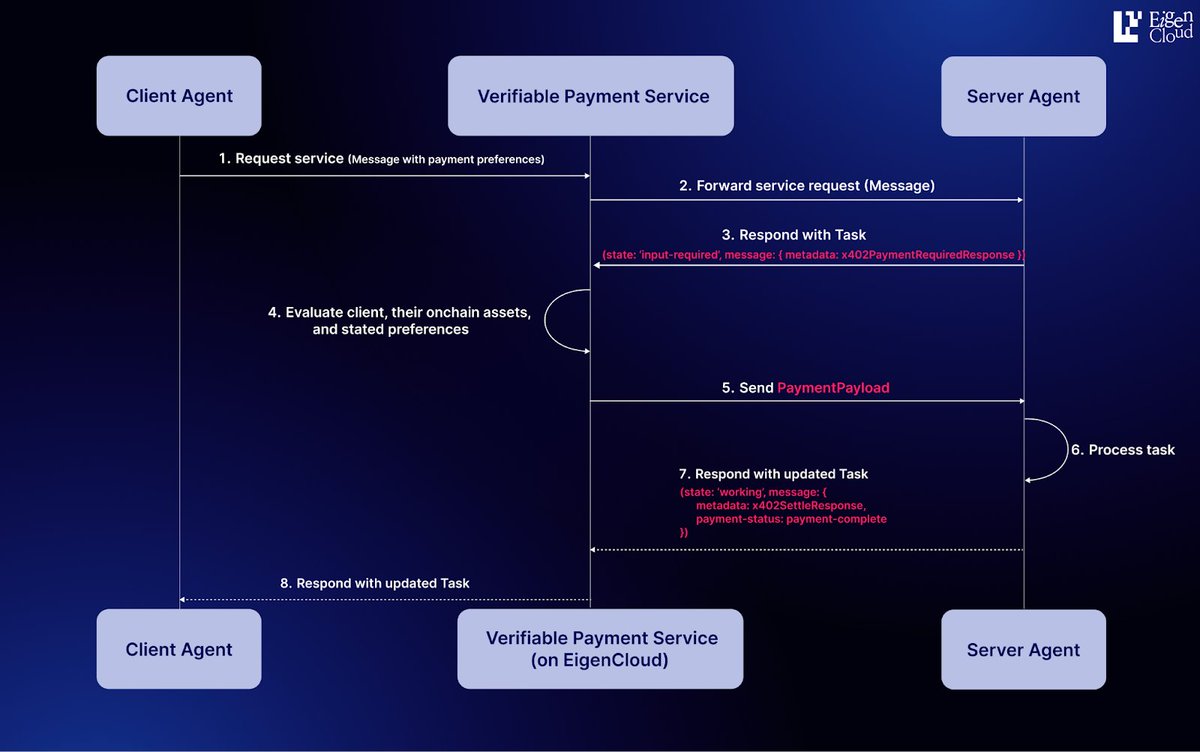
The magic of x402 lies in its elegant yet robust flow that fits naturally into HTTP-based APIs. Here’s how it works at a high level:
- Client request: The client requests access to a protected resource (e. g. , /api/premium-data).
- Server responds with HTTP 402: If payment is required, the server returns an HTTP 402 status code along with details about the amount due (e. g. , $0.01 USDC), accepted networks (such as Solana Mainnet), and recipient address.
- Client pays invoice: The client parses this response and executes the crypto payment using their wallet or programmatic agent.
- Client resubmits with proof: After paying, the client resends their original request, now including cryptographic proof of payment in the headers.
- Server verifies and grants access: If payment is verified on-chain, access is granted immediately.
This standardized workflow enables trustless micropayments without introducing complexity for either side. You can find deeper technical breakdowns in our guides on integrating instant crypto micropayments in APIs using x402.
A Practical Example: Protecting an API Endpoint With Solana USDC Payments
If you’re running an Express. js backend and want to charge $0.01 per API call in USDC on Solana Mainnet, a popular scenario for premium data APIs, the process is refreshingly straightforward thanks to available middleware libraries like @cheapay/x402-express. Here’s what this looks like in practice:
Express.js Middleware for x402 $0.01 USDC Micropayment Gating
Here's a practical example of how you can use Express.js middleware to require a $0.01 USDC micropayment for API access using the x402 HTTP payment protocol. This setup checks for a valid x402 payment proof in the request headers and returns a 402 Payment Required response with the appropriate challenge if payment is missing or invalid.
const express = require('express');
const app = express();

// Mock function to verify x402 payment (replace with real implementation)
async function verifyX402Payment(req) {
  const paymentHeader = req.headers['x402-payment'];
  // Here, you would verify the payment proof and amount
  // For example, check if paymentHeader is a valid $0.01 USDC payment
  return paymentHeader === 'valid-mock-payment-proof';
}

// Middleware to enforce $0.01 USDC payment via x402
async function x402MicropaymentGate(req, res, next) {
  const paymentValid = await verifyX402Payment(req);
  if (!paymentValid) {
    // Respond with x402 challenge
    res.set('WWW-Authenticate', 'x402 amount="0.01", asset="USDC"');
    return res.status(402).json({ error: 'Payment Required: Please pay $0.01 USDC via x402.' });
  }
  next();
}

// Apply the middleware to your API route
app.get('/protected-resource', x402MicropaymentGate, (req, res) => {
  res.json({ message: 'Access granted to protected resource!' });
});

app.listen(3000, () => {
  console.log('API listening on port 3000');
});
Replace the `verifyX402Payment` function with your actual x402 payment verification logic. This example demonstrates the basic gating pattern and how to respond with the `WWW-Authenticate` header for x402 challenges.
The middleware intercepts requests to your premium endpoint and automatically handles the negotiation of payment terms via HTTP 402 responses. Clients only receive your valuable data once their on-chain transaction has been confirmed, no manual accounting required.
With this approach, you can confidently monetize high-value endpoints or throttle access to sensitive data, all while delivering a seamless experience for both human and machine users. The end user never needs to create an account or share personal information, just pay and access, as simple as it should be in the era of programmable money.
Best Practices for Secure x402 Integration
Security and reliability are paramount when handling payments, even at the micropayment scale. Here are a few practical recommendations to ensure your x402 payment flow is robust:
- Validate payment proofs server-side: Always verify cryptographic proofs against the blockchain before granting access.
- Monitor for replay attacks: Ensure each proof of payment is unique and tied to a specific request or nonce.
- Keep payment amounts dynamic: If your pricing changes, update the payment terms in your 402 responses accordingly.
- Audit smart contracts (if custom): If you deploy custom contracts, have them reviewed for vulnerabilities.
If you want to dive deeper into advanced topics like API rate limiting with payments, dynamic pricing based on usage, or supporting multiple blockchains in parallel, check out our related guides such as pay-as-you-go API monetization with x402.
Real-World Use Cases and Next Steps
The x402 protocol unlocks new possibilities far beyond simple paywalls. Here are just a few real-world scenarios where crypto micropayments shine:
- AI APIs: Charge per inference or data point served, perfect for LLMs and generative models.
- IOT and M2M Payments: Enable autonomous agents and devices to transact value without human intervention.
- No-code SaaS tools: Offer granular feature unlocks without complex subscription management.
- Premium content delivery: Gate articles, datasets, or media behind frictionless stablecoin payments.
If you’re ready to experiment with these ideas, start by reviewing the official documentation at x402. org. For a step-by-step walkthrough tailored to web developers, our guide on secure crypto transactions using HTTP Payment Protocol and Coinbase x402 is a must-read.
Final Thoughts: The Future of Pay-Per-Use APIs Is Here
x402 isn’t just another payments SDK, it’s an open standard that reimagines how value flows across the web. By leveraging the HTTP protocol itself for payment negotiation and proof exchange, it removes friction while preserving privacy and decentralization. Whether you’re building next-gen AI services or simply want a better way to monetize digital goods at internet scale, integrating crypto micropayments with x402 positions your API at the forefront of web3 innovation.
If you haven’t already started experimenting with this new paradigm, now’s the time. The tools are ready, and so is the market demand for seamless machine-native payments.




No comments yet. Be the first to share your thoughts!