
The 2026 AI Compliance Mandate: What Every Business Must Know About Data Privacy and Algorithmic Transparency
The regulatory landscape for artificial intelligence is shifting from voluntary guidelines to enforceable law. By 2026, businesses can no longer treat AI governance as an optional add-on. Two major frameworks are driving this change: the European Union’s AI Act and a wave of state-level legislation in the United States.
The EU AI Act entered into force on 1 August 2024 and became fully applicable on 2 August 2026. This regulation imposes strict requirements on high-risk AI systems, including mandatory risk assessments, human oversight mechanisms, and detailed record-keeping for algorithmic transparency. Companies operating in or selling to the EU must align their data practices with these standards to avoid significant penalties. Read more about the EU AI Act.
In the United States, the approach is fragmented but rapidly intensifying. State legislatures have introduced nearly 100 chatbot-specific bills across 34 states in 2026 alone. These laws often target AI-powered customer service interactions, requiring clear disclosures when users are interacting with bots rather than humans. This creates a complex compliance map for businesses operating across multiple jurisdictions. See upcoming 2026 AI laws.
For business leaders, the priority is no longer just innovation speed but regulatory readiness. Data privacy and algorithmic transparency are now legal requirements, not just best practices. Organizations that fail to audit their AI systems against these new 2026 mandates risk legal exposure and reputational damage.
Ai compliance 2026 choices that change the plan
By August 2026, the EU AI Act becomes fully applicable, creating a baseline for high-risk systems, while the EU AI Omnibus extends specific compliance deadlines starting July 27, 2026. Simultaneously, nearly 100 state-level chatbot bills have been introduced across 34 U.S. states, fragmenting the regulatory landscape. Businesses must navigate these overlapping mandates without treating them as interchangeable.
The core tradeoff lies in balancing operational speed against jurisdictional specificity. A system compliant in one region may trigger penalties in another if data residency or transparency requirements differ. The following comparison highlights the distinct compliance burdens businesses face in 2026.
| Compliance Factor | EU AI Act (Aug 2026) | U.S. State Chatbot Laws | Sector-Specific (e.g., Healthcare) |
|---|---|---|---|
| Primary Focus | Risk classification of AI systems | Consumer disclosure and bot identification | Data privacy and patient safety |
| Key Deadline | Full applicability August 2, 2026 | Varies by state; many effective 2026 | Continuous; HIPAA/GDPR updates |
| Transparency Requirement | Clear labeling of AI-generated content | Disclosure that user is interacting with a bot | Audit trails for algorithmic decisions |
| Penalty Structure | Fines up to 7% of global turnover | State-level fines and consumer actions | HIPAA fines up to $1.5M per violation |
| Data Residency | Strict GDPR alignment required | Varies; some states require local storage | High; often requires on-prem or private cloud |
The EU AI Act demands rigorous documentation for high-risk systems, including detailed risk management files and post-market monitoring. In contrast, U.S. state laws focus heavily on user interaction, requiring clear disclosures that a chatbot is not human. Industry-specific regulations add another layer, often demanding stricter data handling protocols than general AI laws.
Businesses should audit their AI deployments against these three pillars. A single system may need to satisfy EU risk classifications, U.S. transparency disclosures, and industry data standards simultaneously. Treating these as separate compliance tasks rather than an integrated framework increases legal exposure and operational complexity.
How to Decide Where Your AI Compliance Starts
The 2026 AI compliance landscape is not a single wall but a series of gates. You need to know which one you are standing in front of. The primary driver is jurisdiction, followed by the specific function of the AI system. Whether you are operating in the European Union or navigating the patchwork of US state laws, the first step is mapping your legal exposure.
1. Map Your Jurisdictional Footprint
Compliance obligations trigger based on where your data subjects are located, not where your servers sit. The EU AI Act, which becomes fully applicable in August 2026, sets the global baseline for high-risk systems. However, US state legislatures are moving aggressively. Nearly 100 chatbot-specific bills were introduced across 34 states in 2026 alone. You must identify every jurisdiction where your AI interacts with end-users to determine which regulatory frameworks apply to your specific operations.
2. Classify Your AI Risk Level
Not all AI systems face the same scrutiny. The EU AI Act categorizes systems by risk: unacceptable, high, limited, and minimal. High-risk systems, such as those used in hiring or critical infrastructure, face the heaviest documentation and transparency requirements. In the US, the focus is often narrower, targeting specific use cases like AI-generated content or automated decision-making in consumer finance. Classify each AI model in your stack to understand the depth of compliance required.
3. Audit Your Data Supply Chain
Compliance failures often originate in the data layer. Regulators are increasingly looking at how training data is sourced and whether it contains prohibited personal information. You must verify that your data pipelines adhere to the strictest jurisdiction you operate in. This includes documenting data provenance, ensuring proper consent mechanisms, and implementing safeguards against bias or privacy violations before the model ever reaches a user.
4. Implement Transparency Mechanisms
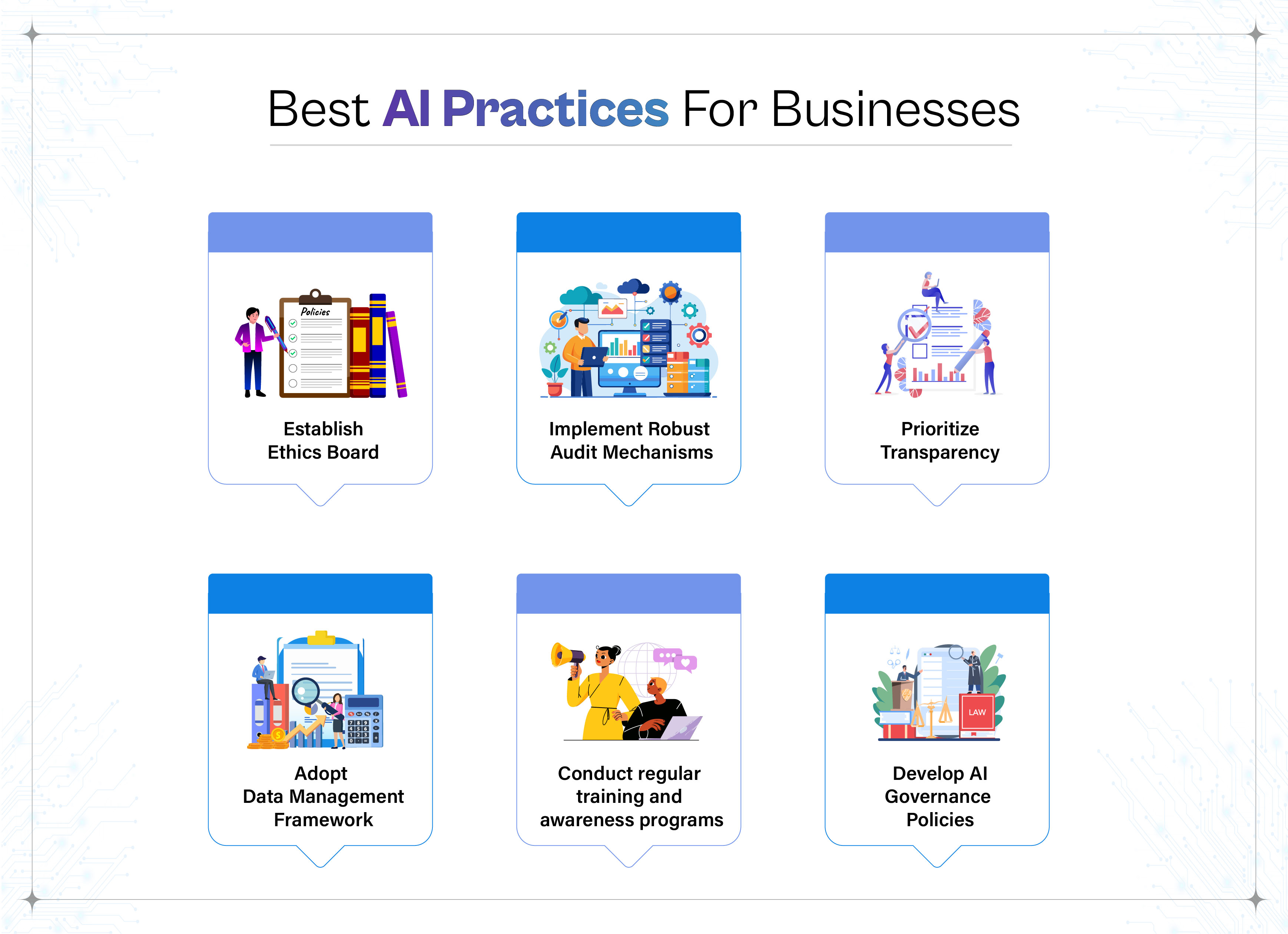
Algorithmic transparency is no longer optional. Under the EU AI Act and emerging US state laws, users have the right to know when they are interacting with AI. This includes clear labeling of chatbots, disclosure of automated decision-making, and accessible explanations of how significant decisions are made. Build these disclosure layers into your user interface from the start, rather than retrofitting them as an afterthought.
5. Establish a Governance Framework
Compliance is an ongoing process, not a one-time checkbox. Establish an internal AI governance committee responsible for regular audits, risk assessments, and incident response. This framework should align with your highest regulatory standard. Document your compliance efforts, maintain records of system performance, and prepare for regulatory inquiries. A robust governance structure demonstrates due diligence and reduces liability if issues arise.
-
Identify all jurisdictions where AI interacts with users
-
Classify each AI system by risk level under applicable laws
-
Audit data sources for privacy and bias compliance
-
Implement user-facing transparency disclosures (e.g., chatbot labeling)
-
Document governance policies and incident response plans
Spotting Weak AI Compliance Options
The 2026 regulatory landscape is shifting from broad principles to specific enforcement mechanisms. As the EU AI Act becomes fully applicable on August 2, 2026, businesses face immediate obligations regarding prohibited AI practices and high-risk transparency requirements. Simultaneously, US state legislatures are introducing nearly 100 chatbot-specific bills across 34 states, creating a fragmented compliance environment that demands precise legal mapping.
When evaluating compliance frameworks, avoid vague "transparency statements" that lack technical specifics. Regulators now require clear disclosures about automated decision-making processes, not just general privacy policies. Similarly, resist the urge to treat AI compliance as a one-time audit. The rapid pace of legislative changes means your compliance strategy must be dynamic, with regular reviews against evolving state and federal guidelines.
Another common mistake is underestimating the scope of "AI literacy" obligations. The EU AI Act explicitly mandates training for personnel involved in AI system development and deployment. Neglecting this educational component can lead to significant penalties, even if the technology itself is compliant. Ensure your training programs are documented and updated regularly to reflect the latest regulatory expectations.
Ai compliance 2026: what to check next
The regulatory landscape for artificial intelligence is shifting from advisory guidelines to enforceable mandates. As of 2026, businesses face a patchwork of state laws in the United States and strict frameworks in the European Union. Understanding these obligations is no longer optional for organizations using automated systems.
When does the EU AI Act take effect?
The EU AI Act entered into force in August 2024 and becomes fully applicable on August 2, 2026. The EU AI Omnibus amendment, effective July 27, 2026, extends specific high-risk compliance deadlines. Organizations must align their governance structures before these dates to avoid significant penalties.
Are there US federal AI laws?
The United States currently lacks a comprehensive federal AI law. Instead, compliance depends on a mix of state regulations and federal agency enforcement. States like California, Colorado, Texas, and Illinois have active rules governing AI transparency and data privacy. The FTC is actively fining firms for deceptive AI practices, creating a de facto national standard through litigation.
Which industries face the strictest rules?
Regulatory scrutiny is heaviest in high-stakes sectors. Healthcare, finance, pharmaceuticals, energy, and transportation face stringent compliance requirements due to the potential harm caused by algorithmic errors. Gartner projects that more than 50% of large enterprises in these sectors will undergo mandatory AI compliance audits by 2026.
Do state laws cover AI chatbots?
Yes. State legislatures have aggressively targeted AI-powered chatbots. Nearly 100 chatbot-specific bills have been introduced across 34 states. These laws typically require clear disclosure when a user is interacting with an AI rather than a human, ensuring transparency in customer service and sales interactions.
No comments yet. Be the first to share your thoughts!