
The 2026 regulatory landscape
The era of voluntary AI governance has concluded. In 2026, enterprises face a fragmented but enforceable regulatory environment that spans federal, state, and international jurisdictions. The shift from soft guidelines to hard mandates requires immediate operational adjustments to avoid significant compliance risks.
At the federal level, the White House released the National Policy Framework for Artificial Intelligence in March 2026. This framework establishes baseline standards to protect civil rights and prevent a fragmented patchwork of state laws, urging agencies to adopt consistent risk-management protocols. Enterprises should align their internal AI governance structures with these federal recommendations to ensure baseline compliance.
State-level action has accelerated alongside federal guidance. Maharashtra, India, implemented its AI Policy 2026 in February, focusing on economic growth and public service delivery. Meanwhile, U.S. states are passing localized statutes that impose specific transparency and audit requirements on automated decision systems. Businesses operating across multiple jurisdictions must now navigate a complex web of conflicting or overlapping obligations.
International frameworks, particularly the EU AI Act’s full enforcement phase, continue to influence global standards. Organizations exporting AI services or data must ensure their models meet the strictest jurisdictional requirements, often treating EU compliance as the de facto global standard. This regulatory tightening transforms AI compliance from a technical consideration into a core legal obligation.
Federal policy and executive orders
The United States is moving from voluntary guidelines to binding federal requirements for artificial intelligence. In February 2026, the White House released the National Policy Framework for Artificial Intelligence, establishing a unified legislative approach to protect American rights while preventing a fragmented patchwork of state regulations. This framework serves as the primary reference for enterprises navigating compliance in the US market.
Key Federal Mandates
The framework outlines specific obligations for organizations deploying AI systems at scale. Enterprises should consider the following core requirements when auditing their operations:
- Risk Management Programs: Organizations must implement structured risk management frameworks to identify and mitigate potential harms from AI deployments.
- Consumer Disclosures: Clear and transparent disclosures are required when consumers interact with AI systems, ensuring they understand the nature of the interaction.
- Algorithmic Discrimination: Mitigation strategies for algorithmic bias are mandatory, requiring regular audits to prevent discriminatory outcomes in hiring, lending, or housing decisions.
Implementation Timeline
Compliance deadlines are set to begin in February 2026, with phased enforcement phases extending into August 2026. Enterprises must align their internal governance structures with these federal standards to avoid regulatory penalties. The framework emphasizes that compliance is not merely a technical checklist but a continuous process of monitoring and adaptation.
Balancing Innovation and Regulation
The federal approach seeks to balance innovation with safety. By establishing clear federal standards, the White House aims to provide legal certainty for businesses while protecting civil rights. Enterprises should monitor updates from the White House Office of Science and Technology Policy for further guidance on specific sectoral applications.
Note: This section provides an overview of federal policy. Enterprises should consult legal counsel to determine specific compliance obligations based on their industry and AI use cases.
State-level mandates and enforcement
The federal landscape is only one part of the compliance picture. A patchwork of state-level mandates is actively reshaping how enterprises deploy AI, with Colorado leading the charge. The Colorado AI Act, which takes effect in February 2026, establishes a rigorous framework for high-risk artificial intelligence systems. This law mandates comprehensive impact assessments, transparency disclosures to consumers, and detailed documentation of AI decision-making processes.
Enterprises should consider the Colorado AI Act as the baseline for state-level compliance. The law requires covered entities to conduct and document risk assessments for any high-risk Automated Decision-Making Technology (ADMT) before its first use. These assessments must evaluate potential harms, including algorithmic discrimination and privacy violations. Documentation must be maintained and made available to the Colorado Attorney General upon request.
Other states are following suit, creating a complex web of requirements. While Colorado’s approach is currently the most developed, states like California and Connecticut are advancing their own legislation. Regulations require enterprises to monitor these developments closely, as non-compliance can result in significant penalties. The trend indicates that state-level oversight will likely expand, making a unified compliance strategy essential.
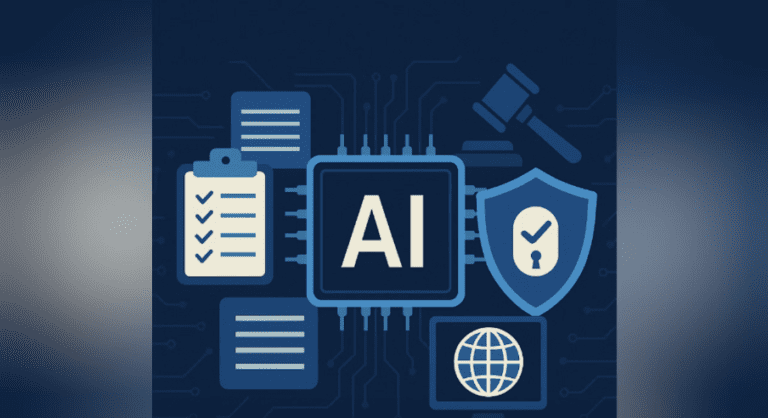
To navigate this shifting landscape, enterprises should prioritize the following compliance tasks:
-
Conduct a comprehensive risk assessment of all high-risk ADMT systems.
-
Document all AI decision-making processes and impact assessments.
-
Prepare consumer disclosures for any high-risk AI interactions.
-
Establish a mitigation plan for potential algorithmic discrimination.
-
Monitor state-level legislative updates for new compliance requirements.
EU AI Act phase two obligations
The European Union’s AI Act enters its second phase in August 2026, marking a significant shift in compliance requirements for enterprises operating within or selling to the European market. While the initial phase focused on foundational governance and prohibited practices, the upcoming obligations target the operational realities of high-risk AI systems and general-purpose AI models.
Enterprises should consider the new transparency rules as a mandatory disclosure framework. Under the revised regulations, providers of general-purpose AI models must publish detailed summaries of the content used for training. This requirement aims to ensure copyright compliance and provide clarity on data provenance, a critical factor for companies relying on large-scale datasets.
High-risk AI systems face even stricter documentation demands. By the August 2026 deadline, organizations must maintain comprehensive technical documentation that covers system design, risk management processes, and data governance. This documentation must be readily available for regulatory authorities, ensuring that safety and fundamental rights are embedded throughout the system's lifecycle.
For global companies, these rules create a de facto standard. Even if not headquartered in the EU, any entity offering AI services to European users must align with these phase two obligations. Failure to comply can result in substantial fines and operational restrictions, making early preparation essential for maintaining market access.
Enterprise compliance steps
Aligning with the 2026 regulatory landscape requires a structured approach to governance. Enterprises should consider adopting a phased compliance framework that moves from initial inventory to comprehensive documentation. This sequence ensures that organizations can meet the demands of emerging laws in the European Union, the United States, and specific state jurisdictions.
Begin by cataloging all artificial intelligence tools in use. Regulations in the European Union, the United States, and various state jurisdictions now require a clear understanding of which AI systems are deployed. Enterprises should consider mapping these tools against their intended use cases to identify potential regulatory overlaps.
For high-risk applications, a formal risk assessment is mandatory. Under the EU AI Act, which enters its second phase in August 2026, covered entities must document these assessments before first use. Similarly, state laws in the United States, such as those in Colorado, require risk assessments for automated decision systems deployed on or after January 1, 2026.
Maintain detailed records of system design, training data, and risk mitigation strategies. The EU AI Act and the Illinois Artificial Intelligence Video Interview Act require enterprises to keep documentation available for regulatory review. This includes records of data governance and the specific safeguards implemented to ensure system reliability.
Implement clear communication channels for users interacting with AI systems. Transparency requirements under the EU AI Act and the EU AI Act Phase Two (August 2026) mandate that users are informed when they are interacting with an AI system. Enterprises should consider adding clear labels or notifications to ensure compliance with these transparency standards.
Continuous monitoring and periodic audits are essential for ongoing compliance. As the regulatory environment evolves, enterprises should consider establishing regular audit cycles to verify that AI systems continue to meet legal requirements. This proactive approach helps mitigate risks and ensures that compliance measures remain effective as new laws take effect.
Common questions on AI regulation 2026
Enterprises navigating the evolving AI compliance landscape in 2026 must distinguish between federal frameworks and emerging state-level mandates. The regulatory environment is shifting from voluntary guidelines to enforceable statutory requirements, particularly in jurisdictions like Maharashtra and several U.S. states.
Enterprises should consider these jurisdictional differences when structuring their compliance strategies. The White House has emphasized the need for a cohesive federal framework to support innovation while protecting rights, but immediate obligations often stem from state statutes.
No comments yet. Be the first to share your thoughts!