
Optimize your Google Business Profile
Your Google Business Profile (GBP) is the primary landing page for local search in 2026. When potential customers search for services near them, Google pulls data directly from your profile to populate the map pack and local results. If your profile is incomplete or outdated, you are invisible to high-intent local traffic.
Optimization is an ongoing workflow, not a one-time setup. Follow this sequence to ensure your business ranks competitively in local search results.

Start by claiming ownership of your business on Google. If you have never managed this profile, you must verify your address or service area through a postcard, phone call, or video verification. Verification confirms you are the legitimate owner and unlocks the ability to edit critical business details.
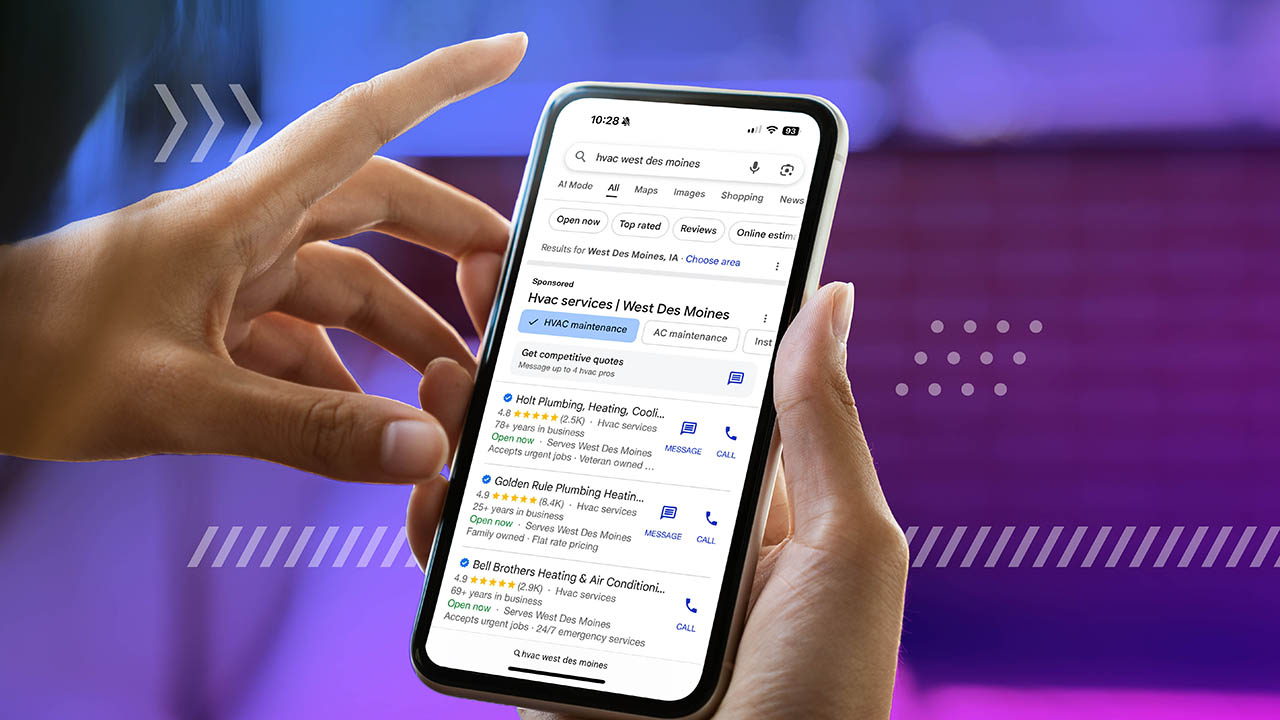
Fill out every available field in your profile. This includes your business category, hours, services, and products. In 2026, Google’s algorithm relies heavily on these attributes to match your business with specific user queries. Incomplete profiles struggle to rank because the system cannot accurately categorize your offerings.

Visual content drives engagement. Upload clear photos of your exterior, interior, team, and products. Profiles with recent photos receive significantly more clicks and direction requests. Aim to add new images monthly to signal to Google that your business is active and relevant.

Use the "Posts" feature to share news, events, or special offers. These posts appear directly in your local search result and expire after a short period. Regular posting keeps your profile fresh and gives Google more content to index, improving your chances of appearing in top local results.

Respond to every review, both positive and negative. A timely response shows potential customers that you value feedback. Google also considers review activity as a ranking signal. Encourage satisfied customers to leave reviews to build social proof and improve your local search visibility.
By following these steps, you create a robust foundation for local search success. Consistency is key; update your profile whenever business details change, and keep your content fresh to maintain visibility in the competitive local landscape.
Build local relevance with on-page signals
On-page optimization tells search engines exactly who you are and where you operate. In 2026, this goes beyond simple keyword stuffing. You need to align your website content with local intent using structured data and trust signals.
Add local business schema
Schema markup is the direct line of communication between your website and search engines. It provides explicit data about your business name, address, phone number, and operating hours. This structured data helps Google verify your NAP (Name, Address, Phone) consistency across the web.
Use the LocalBusiness schema type. Include detailed attributes like geo coordinates and openingHoursSpecification. This reduces ambiguity and increases the chance of appearing in rich results.
Strengthen trust signals
Experience, Expertise, Authoritativeness, and Trustworthiness (E-E-A-T) are critical for local relevance. For small businesses, this means proving you are a legitimate local entity.
Include an "About Us" page that highlights your local history and community involvement. Display team member bios with credentials. Link to local chamber of commerce memberships or industry associations. These signals build trust with both users and algorithms.
Adapt to AI-driven search results
Search is shifting from blue links to conversational answers. Google’s AI Overviews and similar features in Bing and Perplexity now synthesize information directly in the SERP. For small businesses, this means fewer clicks to your website and more visibility in the answer box itself. If you aren’t optimizing for these AI-driven search results, you are invisible to a growing segment of local customers.
The goal is to structure your content so AI models can easily extract and cite your business as the authoritative local source. This requires a shift from keyword stuffing to direct, factual answers that match natural language queries.
Step 1: Structure content for direct extraction
AI models look for clear, concise answers to specific questions. Instead of burying your service details in long paragraphs, use short, declarative sentences that directly answer "who, what, where, and when."
- Identify high-intent questions: Use tools like AnswerThePublic or review your own customer support logs to find the most common questions local customers ask.
- Write direct answers: Start your section with a one-sentence answer. Follow with supporting details, bullet points, or a short paragraph.
- Use clear headings: Use H2 and H3 tags that mirror natural language questions (e.g., "How much does an emergency plumber cost in [City]?").
Step 2: Optimize for local intent in AI summaries
AI search results for local queries often pull from your Google Business Profile, reviews, and structured data. Ensure your NAP (Name, Address, Phone) is consistent across all platforms. More importantly, add schema markup to your website to help AI understand your services, hours, and service areas.
When AI summarizes local businesses, it favors those with clear, verified information. Incomplete or conflicting data leads to hallucinations or omitted citations. Regularly audit your GBP and website data to ensure accuracy.
Step 3: Monitor and adapt to AI visibility
Tracking your position in traditional blue links is no longer enough. Use tools that specifically monitor AI Overview visibility and citation frequency. If you notice your business is frequently cited, analyze the queries driving those citations and create more content around those topics.
If you are missing from AI summaries, review your content for clarity and authority. Add more local context, customer testimonials, and specific service details that AI models can confidently extract and present to users.
Manage reviews and reputation actively
Reviews are a primary ranking signal for local search. Google uses them to gauge relevance, authority, and trustworthiness. A steady stream of positive feedback tells the algorithm that your business is active and valued by customers.
Generate reviews by asking at the right moment. Send a direct link via email or text immediately after a service is completed. Make the process frictionless; if a customer has to search for your Google Business Profile, they will likely leave.
Respond to every review, good or bad. A simple "thank you" reinforces positive sentiment. For negative reviews, acknowledge the issue and offer to take the conversation offline. This shows prospective customers that you care about service quality.
Reputation management is not passive. Monitor your listings weekly. Addressing complaints quickly can turn a detractor into a promoter and signals to search engines that you are engaged with your community.
Optimize for voice and mobile queries
Local search has shifted from typed keywords to spoken questions. When customers ask their phones, "Where can I get pizza near me?" or "Is the plumber open on Sundays?", they expect immediate, accurate answers. To capture this traffic, your content must be structured for natural language and your site must load instantly on mobile devices.
Structure content for natural language
Voice searches are typically longer and more conversational than typed queries. Instead of targeting single keywords like "plumber," structure your FAQ sections and blog posts around full questions. Use simple, direct sentences that answer "who," "what," "where," and "when." This helps search engines match your content to voice assistants.
Ensure mobile-first usability
Google uses mobile-first indexing, meaning it primarily uses the mobile version of your site for ranking. If your pages are slow or hard to navigate on a phone, you will lose visibility. Test your site speed regularly and ensure buttons are large enough to tap easily. A seamless mobile experience signals to search engines that your business is reliable for local users.
Combine local signals with intent
Voice queries often have strong local intent. Make sure your business name, address, and phone number are consistent across your website and Google Business Profile. When users speak to their devices, they want to know if you are open now and how to get there. Clear, concise local data helps you appear in the featured snippets that voice assistants read aloud.
Track progress with the right tools
Local SEO in 2026 requires a comprehensive approach to monitoring, but you don't need expensive enterprise software to stay ahead. Focus on a few core metrics that directly impact your visibility in local search results. Use the following steps to set up a tracking routine that fits your workflow.

Your GBP is the engine of your local strategy. Check for health warnings, ensure all categories and attributes are current, and verify that your service areas are accurate. Consistency here signals trust to search engines.

Track how many new reviews you receive each week and respond to them promptly. Use tools to alert you to new reviews so you can maintain high engagement, which is a ranking factor in 2026.
Use rank tracking tools to monitor your position in the local 3-pack for your primary keywords. Focus on "near me" queries and specific service areas rather than broad national terms to gauge true local impact.
Check Google Analytics to see how much traffic comes from organic local search versus direct visits. A healthy local SEO strategy should show steady growth in organic clicks from your target geographic region.


As an Amazon Associate, we may earn from qualifying purchases.
Common local SEO questions for 2026
Local search is shifting from simple directory listings to conversational, AI-driven answers. Small businesses must adapt their local SEO strategy to remain visible when customers ask complex questions rather than typing short keywords.
Is my website still necessary for local SEO in 2026?
Yes, but its role has changed. Customers increasingly find solutions through AI summaries without visiting your site. Your website now serves as the authoritative source that feeds these AI models. Ensure your Google Business Profile is optimized, as it often appears directly in search results alongside AI answers. Source: Reddit r/localseo
How do I rank for AI-generated local answers?
Focus on E-E-A-T signals and structured data. AI search engines prioritize businesses with clear, verifiable expertise and strong review histories. Use schema markup to explicitly define your services, location, and hours. This helps AI models understand your business context and cite you as a trusted local source.
What is the most important local SEO task for 2026?
Optimizing your Google Business Profile remains the highest-impact task. It is the primary data source for map packs and AI overviews. Keep your information accurate, post regular updates, and respond to reviews. Consistency across your online presence builds the trust signals AI algorithms require.
No comments yet. Be the first to share your thoughts!