

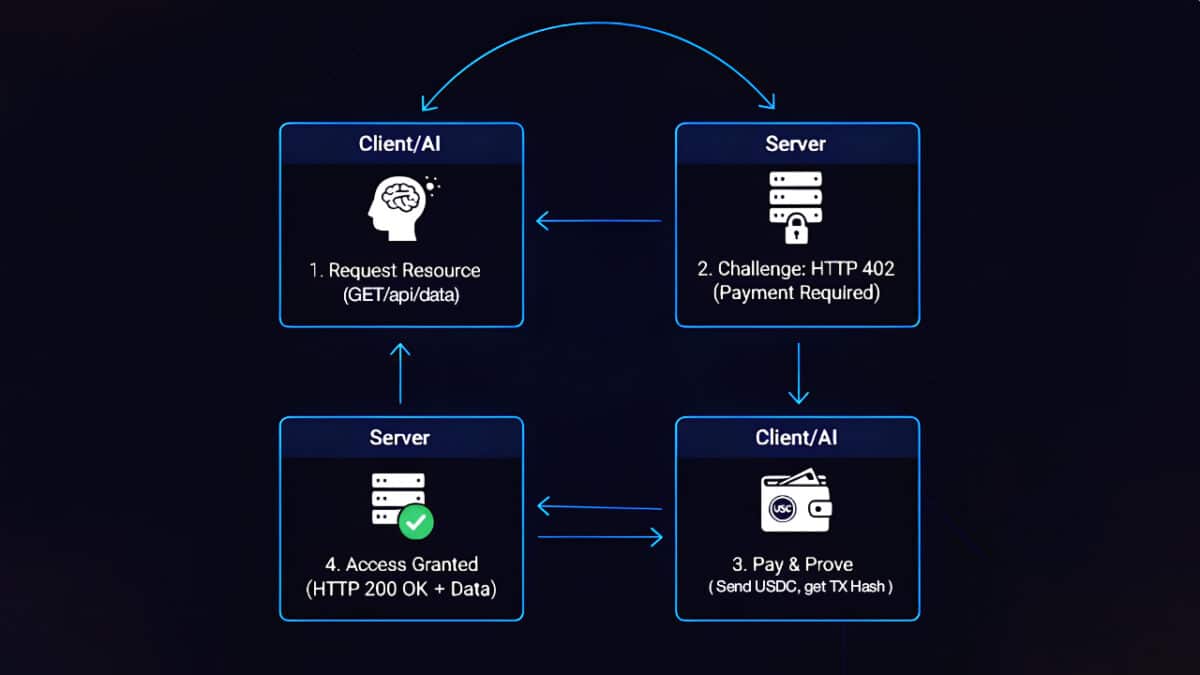
Seamless, cross-chain crypto payments are no longer a future promise, they're a 2025 reality thanks to Coinbase X402 and its innovative payment intent protocol. As digital commerce evolves and AI agents increasingly transact on our behalf, developers and businesses need robust tools to accept, verify, and settle cryptocurrency payments across multiple blockchains with minimal friction. Coinbase X402 delivers just that by leveraging the HTTP 402 "Payment Required" status code, transforming how APIs, web apps, and autonomous agents handle payments in real time.
Why Cross-Chain Crypto Payments Matter in 2025
The explosion of decentralized applications (dApps), programmable AI agents, and borderless e-commerce has made cross-chain crypto payments essential. Users expect to pay with their preferred digital assets, whether USDC on Ethereum or BNB on BNB Chain, without worrying about network compatibility or complex wallet flows. At the same time, businesses want secure, automated settlement without running their own blockchain infrastructure.
Coinbase X402 is purpose-built for this new era. By standardizing payment requests over HTTP and integrating with protocols like EIP-3009 for gasless stablecoin transfers, X402 makes it possible to trigger payments from any compatible client, including browsers, bots, or smart contracts, while facilitators handle validation and compliance in the background.
The Core Building Blocks of Coinbase X402 Integration
Before diving into hands-on integration steps, let’s break down what sets the X402 payment protocol apart:
- HTTP-Native Payments: Revives the HTTP 402 status code as a universal signal that a resource (API endpoint or content) requires payment. This is machine-readable and easily integrated into modern web stacks.
- Payment Intents Schema: Defines how servers communicate payment requirements (amounts, accepted tokens/networks) and how clients respond with signed payment payloads.
- EIP-3009 Support: Enables gasless stablecoin transfers via off-chain authorization, a breakthrough for UX since users don’t need native token balances for fees.
- Facilitator Services: Third-party services like AEON validate transactions across supported chains (Ethereum, Base, BNB Chain), ensuring security and regulatory compliance without merchants managing their own nodes.
- AI Agent Integration: Allows autonomous bots or AI workflows to pay for API access or services directly, unlocking new use cases in automated commerce.
This architecture means you can build advanced paywalls, metered APIs, decentralized marketplaces, or even let your app’s AI agent pay other agents, using a single protocol that abstracts away network complexity.
Step-by-Step: Laying the Groundwork for Your X402 Payment Flow
If you’re ready to enable cross-chain crypto payments using Coinbase X402 in your application or service this year, here’s where you start:
- Dive Into Protocol Specs: Study the official protocol documentation to understand request/response flows using HTTP 402. Pay special attention to how payment requirements are communicated via headers and JSON schemas. For more technical depth on integrating with decentralized applications specifically, check out our guide at this link.
- EIP-3009 Compatibility Check: Confirm that your chosen stablecoins (e. g. , USDC) support EIP-3009 for gasless transfers. This is critical for smooth user experiences where buyers only need token balances, not ETH or BNB, to complete purchases.
- Select an X402 Facilitator: Rather than spinning up your own infrastructure for payment verification and settlement across chains, choose a facilitator service like AEON that supports all major networks. These facilitators handle transaction validation so you can focus on building features instead of compliance headaches.
The next section will walk through practical integration patterns, including sample code snippets, for both server-side sellers (APIs/dApps) as well as client-side buyers (web apps or bots). You’ll also learn how to test your implementation on testnets before going live with real assets.
Implementing X402 Payment Intents: From Code to Cross-Chain Settlement
Once you’ve selected your facilitator and confirmed EIP-3009 support, you’re ready to piece together a working payment flow. The process is straightforward, but there are a few nuances that will help you avoid common pitfalls:
- Set Up Your Seller Endpoint: Configure your API or web service to respond with an HTTP 402 status and a
Payment-Requiredheader when payment is needed. This should include details like accepted token types, chains, and the payment intent payload schema. - Generate and Sign Payment Payloads: On the client side (browser, bot, or AI agent), build a payment payload that matches the server’s requirements. Use wallet libraries or Coinbase developer tools to sign the intent using EIP-3009 or standard ERC-20 methods.
- Submit Payment Proof: The client resends the request with the signed payment proof in headers or body as specified by X402. The facilitator validates this on-chain before granting access.
- Handle Cross-Chain Logic: If your users pay from different blockchains, ensure your facilitator supports atomic validation across all target networks. This abstracts away chain complexity for both you and your end users.
This workflow applies whether you’re building a metered API, a premium content paywall, or an e-commerce checkout. For more advanced integrations, such as letting AI agents autonomously purchase data feeds or trigger on-chain workflows, simply extend your logic to interact with agent platforms like Chainlink CRE.
Express.js Route Example: Handling x402 Payment Intents and EIP-3009 Validation
Below is an example of how you might implement an Express.js route that handles HTTP 402 responses using the x402 protocol and validates an EIP-3009 authorization for cross-chain crypto payments.
const express = require('express');
const bodyParser = require('body-parser');
const { verifyEIP3009Authorization } = require('./eip3009-utils'); // hypothetical helper

const app = express();
app.use(bodyParser.json());

// Example route that requires payment via x402 and EIP-3009 authorization
app.post('/api/premium-resource', async (req, res) => {
  const x402Header = req.headers['x402-payment-intent'];
  const eip3009Auth = req.body.eip3009Authorization;

  if (!x402Header || !eip3009Auth) {
    // Respond with HTTP 402 Payment Required and x402 payment intent
    return res.status(402).json({
      message: 'Payment Required',
      x402: {
        paymentIntent: 'x402://coinbase.com/payments/intent-id',
        chain: 'ethereum',
        amount: '0.01',
        currency: 'USDC',
        instructions: 'Authorize payment using EIP-3009 and resubmit.'
      }
    });
  }

  // Validate EIP-3009 authorization (signature, validity, etc.)
  const isValid = await verifyEIP3009Authorization(eip3009Auth);
  if (!isValid) {
    return res.status(403).json({ message: 'Invalid EIP-3009 authorization.' });
  }

  // Payment verified, proceed to serve the resource
  res.json({ success: true, data: 'Here is your premium resource!' });
});

app.listen(3000, () => {
  console.log('Server running on port 3000');
});
This route checks for the required x402 payment intent and EIP-3009 authorization. If either is missing, it responds with a 402 Payment Required, including payment instructions. If the authorization is present, it validates it before granting access to the protected resource.
If you want deeper technical walkthroughs for integrating X402 into modern e-commerce flows, see our dedicated guide at this link. For decentralized app (dApp) scenarios, including smart contract interactions, explore our focused tutorial at this page.
Testing and Going Live: Best Practices for Secure Crypto Transactions
Before launching with real assets, thoroughly test your integration on supported testnets (like Base Sepolia). Use sandbox wallets to simulate buyer/seller flows and verify that cross-chain payments settle correctly through your chosen facilitator. Pay particular attention to edge cases such as network congestion or partial payments, robust error handling is key in production environments.
X402’s modular approach also allows for phased rollouts: start with one stablecoin on a single network, then expand support for more tokens and chains as user demand grows. Facilitators typically provide dashboards for monitoring transaction status and compliance reporting, leverage these tools to streamline operations and reduce manual oversight.
The Future of Internet-Native Payments Is Here
The combination of HTTP-native requests, gasless stablecoin transfers via EIP-3009, and seamless cross-chain settlement positions Coinbase X402 as a foundational protocol for digital commerce in 2025 and beyond. Whether you’re building next-gen dApps, enabling AI-driven transactions, or simply want frictionless crypto checkout for global users, X402 offers both flexibility and security at scale.
If you’re ready to move fast with cross-chain crypto payments in your own product stack, or want expert guidance on best practices, dive into our advanced guides covering every aspect of integration:
- Integrating HTTP Payment Protocol with Coinbase X402
- Reducing International Transaction Fees With X402
- X402 and Coinbase Base Integration Guide
The shift toward internet-native payments is accelerating, and by leveraging Coinbase X402’s unified approach to payment intents, developers can confidently deliver secure, borderless experiences that meet the demands of tomorrow’s digital economy.



No comments yet. Be the first to share your thoughts!