

Imagine unlocking premium APIs, digital content, or even AI agent capabilities with a single crypto payment - no account signups, no clunky API keys. That’s the paradigm shift X402 Payment Intents and the HTTP Payment Protocol are driving right now. If you’re building for a world where seamless, secure, and instant crypto transactions are the norm, integrating X402 is your golden ticket.
Why X402 Payment Intents are Changing the Game
The X402 protocol revives the long-dormant HTTP 402 "Payment Required" status code, turning it into a powerful tool for blockchain-enabled payments. Instead of cobbling together off-chain payment systems or relying on centralized gateways, you can now embed pay-per-use access directly into your web APIs and apps. This is especially huge for:
- API monetization (think pay-per-call data feeds)
- Digital content paywalls
- AI agent-to-agent transactions
- Machine-to-machine payments
No more friction. No more user accounts or opaque subscription tiers. Just instant blockchain settlement using stablecoins or any supported asset - and you get to decide which ones to accept.
The Anatomy of an X402-Enabled Payment Flow
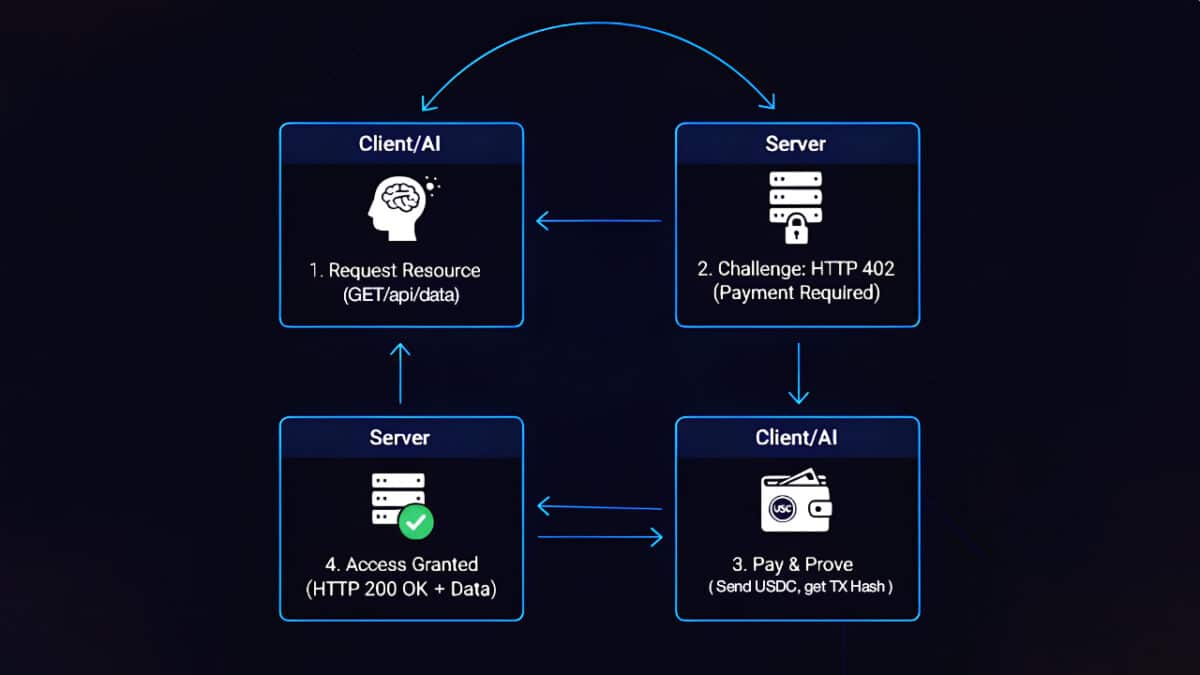
Let’s break down how this works under the hood. When a client requests a protected resource (like /api/premium-content) without payment, your server responds with an HTTP 402 status and clear payment instructions:
Sample HTTP 402 Response for X402 Payment Intent
When your API or service requires payment, you'll typically respond with an HTTP 402 status and a JSON body describing the payment intent. Here's a sample X402 Payment Intent response you might return:
{
  "status": 402,
  "title": "Payment Required",
  "detail": "A payment is required to access this resource.",
  "payment_intent": {
    "id": "pi_1Hh1YZ2eZvKYlo2C",
    "amount": 0.0025,
    "currency": "ETH",
    "expires_at": "2024-07-01T12:00:00Z",
    "payment_url": "https://pay.x402.com/intents/pi_1Hh1YZ2eZvKYlo2C"
  },
  "instructions": "Please complete the payment using the provided payment_url."
}
This JSON response gives the client all the details they need to initiate a crypto payment—amount, currency, expiration, and a direct link to complete the transaction. Simple and actionable!
This response lays out everything needed: amount required, asset type, recipient address, network - all in one transparent package. The client then initiates a crypto transaction (often via a wallet or automated agent), attaches proof of payment to their next request, and boom - access is granted once verified on-chain.
“X402 is what happens when you let developers rethink payments from first principles, it’s like Stripe for onchain microtransactions. ”
Step-by-Step: Integrating X402 Payment Intents with Your API
This isn’t just theory, let’s get actionable. Here’s how you can set up X402 Payment Intents in your own stack:
- Respond with HTTP 402 when payment is required: Configure your endpoints to check if the user has paid; if not, send an HTTP 402 response with all relevant details (amount, currency, wallet address).
- Add payment verification middleware: Use libraries like
@peac/coreor@viainti/x402to validate incoming receipts against onchain data before granting access. - Simplify integration with existing tools: The npm package
@viainti/x402provides drop-in middleware and UI hooks, perfect for Express. js backends and React frontends alike. - Test in sandbox mode before going live: Always validate your flow on testnets (like Base Sepolia) to catch edge cases before deploying to mainnet.
If you want hands-on guidance or deeper technical dives into implementing these steps (including code samples), check out our full developer walkthrough at this guide.
With the basics in play, let’s talk about what makes X402 Payment Intents integration truly stand out for modern crypto developers and forward-thinking businesses. The magic isn’t just in the protocol - it’s in how frictionless and future-proof your payment flows become.
Best Practices for Secure Crypto Payment Integration
Security is non-negotiable, especially when handling onchain payments. Here are a few actionable tips to help you lock down your X402-powered endpoints:
- Always verify payment proofs on-chain: Never trust user-supplied receipts blindly. Use trusted libraries to validate every transaction against the blockchain.
- Enforce rate limits and anti-abuse logic: Even with pay-per-use, bots may try to game your endpoints. Layer on rate limiting and fraud detection.
- Support multiple assets/networks if possible: Give users flexibility by accepting stablecoins across Ethereum, Base, or other supported chains, just configure your X402 middleware accordingly.
- Log payment attempts and responses: Detailed logs make debugging much easier if something goes sideways during integration or live ops.
Real-World Use Cases: From AI Agents to Paywalled APIs
The most exciting thing about X402 is its versatility. Here are just a few ways teams are already using it:
- Pay-per-call APIs: Monetize data feeds, ML inference endpoints, or premium analytics with instant access after crypto payment.
- Digital content paywalls: Unlock articles, downloads, or video streams without clunky subscriptions, just a one-off payment per resource.
- M2M (Machine-to-Machine) payments: Enable autonomous agents (think IoT devices or AI bots) to pay for compute, bandwidth, or API usage in real time.
If you want to see this in action with sample code and step-by-step walkthroughs, check out our extended tutorial at this integration guide.
Troubleshooting and Next Steps
If you’re running into issues during development, whether it’s failed verifications or unexpected HTTP responses, start by double-checking your middleware config and ensure you’re always testing with up-to-date testnet assets. The open-source community around X402 is growing fast; don’t hesitate to tap into public repos or Discord channels for support.
The bottom line? Embedding secure crypto payments into any HTTP resource is now as simple as sending a status code. Whether you’re monetizing APIs, digital content, or building agent-based apps for the future of web automation, X402 Payment Intents give you the rails for seamless, and unstoppable, crypto monetization.
Ready to take your web payments into the next era?




No comments yet. Be the first to share your thoughts!